Dreaming about an Altadena home with original woodwork, a deep front porch, or a clay tile roof? That charm is real, but so are the practical questions that come with buying an older property in this foothill community. If you are hoping to find a home with personality and long-term value, it helps to understand what gives Altadena homes their character and what issues deserve a closer look before you buy. Let’s dive in.
Why Altadena attracts character-home buyers
Altadena has one of the more varied residential housing stocks in the Los Angeles foothills. Los Angeles County planning describes a mix that includes Spanish Colonial Revival, Tudor Revival, Craftsman, Pueblo Revival, Italianate, Colonial Revival, Shingle Style, Queen Anne, Minimal Traditional, Ranch, Post-and-Beam, and Contemporary homes.
That variety reflects how the community grew over time. Altadena Heritage notes that development expanded from the 1887 subdivision boom through the 1920s and then again after World War II, which helps explain why you can still find early bungalows, period-revival homes, and mid-century properties in the same market.
You will also notice differences within Altadena itself. County planning notes that northern Altadena often has larger lots and more elaborate homes, including potentially architect-designed properties. There is also a notable cluster of early modernist homes designed by Gregory Ain along Highland Avenue, which is a good reminder that Altadena is not defined by Craftsman homes alone.
What gives a home character
When buyers talk about a “character home,” they usually mean a property with architecture and details that stand out from newer construction. In Altadena, that can look very different from one block to the next.
Craftsman details to spot
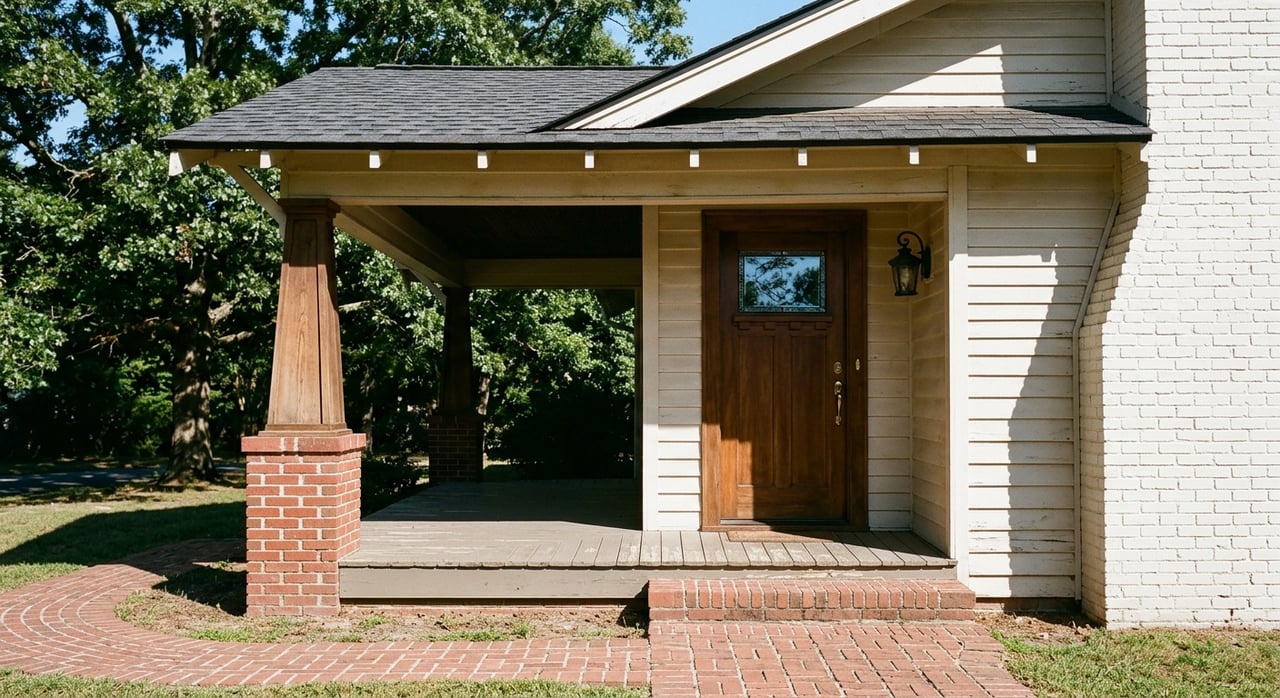
Los Angeles County describes Craftsman homes as one- or two-story houses with site-responsive forms, low-pitched gabled roofs, exposed structural members, shingle exteriors, broad porches, natural materials, and grouped casement windows.
If you are touring a Craftsman in Altadena, pay attention to whether those original exterior elements are still intact. They are often part of what gives the home its visual appeal and may also matter if the property has any historic designation.
Spanish Colonial Revival features
Spanish Colonial Revival homes are typically identified by asymmetrical façades, patios or courtyards, clay tile roofs, stucco walls, arched openings, and often multi-pane casement windows.
These homes can offer strong curb appeal and indoor-outdoor living features. At the same time, items like tile roofs, stucco condition, and older windows deserve careful review during inspections.
Tudor and Storybook elements
Tudor Revival homes often feature irregular massing, steep gables, prominent chimneys, half-timbering, and narrow grouped windows. Storybook variations may go even further with exaggerated rooflines or tower-like forms.
These details can make a house feel truly one of a kind. They can also mean more specialized repair or maintenance needs, especially around roofing, chimney work, and exterior finishes.
Mid-century and post-and-beam design
Mid-century modern and post-and-beam homes in the county context are generally associated with horizontal massing, flat or low-pitched roofs, wide eaves, and exposed post-and-beam construction.
In Altadena, these homes broaden the idea of what a character property can be. If you love clean lines and strong indoor-outdoor connections, this segment of the market is worth watching closely.
Inspect the house as a full system
Charm should never replace due diligence. Older homes need to be evaluated as whole systems, not just as beautiful rooms and original details.
HUD rehabilitation guidance says older residential buildings should be assessed for the site, exterior, interior, structural, electrical, plumbing, and HVAC systems. That bigger-picture approach matters in Altadena, where a house may have been updated in stages over many decades.
Budget for common older-home updates
A character home may need more than cosmetic work. Based on the inspection and retrofit guidance in the research, buyers should be ready to budget for:
- Roof work
- Drainage improvements
- Foundation or seismic upgrades
- Electrical updates
- Plumbing repairs or replacement
- HVAC repair or replacement
- Lead or asbestos mitigation when needed
This does not mean every older home will need all of these items. It does mean you should go in with realistic expectations and a reserve for post-closing work.
Watch for lead in older homes
The EPA states that the older the home, the more likely it is to contain lead-based paint. It estimates that 87 percent of homes built before 1940 and 24 percent of homes built between 1960 and 1978 contain some lead-based paint.
If you are considering a pre-1978 property, renovations and repairs can create lead dust. That is why certified lead-safe work practices matter if you plan to repaint, remodel, or disturb older painted surfaces.
Handle asbestos carefully
The EPA advises leaving undisturbed asbestos-containing material alone, but using a trained and accredited professional if the material is damaged or if remodeling could disturb it.
This is especially important in older homes where buyers may want to update kitchens, baths, flooring, or mechanical systems. Improper sampling or removal can increase risk rather than reduce it.
Don’t skip electrical review
The U.S. Consumer Product Safety Commission says homes that are 40 years or older should have an electrical inspection, especially if they have older or damaged wiring, have been remodeled, or have had major appliance additions.
That guidance fits many Altadena character homes. Even if a home looks beautifully maintained, the electrical system may not reflect modern usage without updates.
Seismic upgrades matter in California
No area of California is without earthquake risk, according to the California Earthquake Authority. For older houses, that makes foundation condition and retrofit history especially important.
The California Earthquake Authority notes that older raised-foundation homes can shift off their foundations and older chimneys can crack or fall away. Common retrofit steps include bolting the house to the foundation and bracing crawl-space walls.
It also says buyers should consider a retrofit for older homes built before 2000. In practical terms, if you are buying a vintage Altadena property, ask whether prior seismic work was done, whether it was permitted, and whether a specialist should evaluate what still needs attention.
Check permits and county records early
Because Altadena is unincorporated Los Angeles County, county departments handle permits, inspections, and many related service questions. That makes permit history a key part of buying an older home here.
Los Angeles County Building and Safety states that a permit creates a permanent construction record, and permitted work is subject to inspections before final approval. For buyers, that means additions, garage conversions, foundation work, and major remodels should be checked against available county records.
Why permit history matters
Missing records do not always mean poor work, but they do create questions. If a seller says a kitchen, addition, or structural upgrade was completed years ago, you will want to confirm whether permits were pulled and finaled.
This step can be especially important in a market with older housing stock and long ownership timelines. A careful review can help you better understand what was legally added, improved, or altered over time.
Historic status can affect future plans
Some of Altadena’s appeal comes from homes and areas with historic significance. That can be a benefit if you value preserved architecture, but it can also shape what changes you can make later.
Los Angeles County’s historic-preservation program includes an ordinance and a Mills Act contract program for qualified historic properties in unincorporated areas. County guidelines state that a Certificate of Appropriateness is required before exterior work or work affecting character-defining features on a landmark or historic-district property, while some maintenance, repair, painting, certain solar work, and some landscaping changes are exempt.
What buyers should verify
County planning notes that Altadena has county landmarks, a pending historic district, and California and nationally listed properties. Because of that, designation checks belong in your early due diligence.
If a home is a landmark, a district contributor, or otherwise designated, future renovation plans may involve added review. That does not have to be a dealbreaker, but it should be part of your decision-making before you write an offer.
Wildfire context is now part of the search
Altadena’s current wildfire context is also part of buying wisely in this market. The Eaton Fire started on January 7, 2025 and impacted Altadena, and Los Angeles County maintains recovery resources and a One-Stop Permit Center for rebuilding questions.
If you are looking at a property in or near an affected area, you should check whether debris removal and permits are complete and whether the home is in a burn or rebuild area. This is a practical step that can affect both timeline and future planning.
Look for home-hardening features
CAL FIRE says wildfire preparedness depends on both home hardening and defensible space. It identifies the first five feet from the house as an ember-resistant zone and recommends 100 feet of defensible space overall.
CAL FIRE also identifies roofs as especially vulnerable and recommends Class A roof coverings and keeping roofs and gutters free of debris. When you tour an Altadena character home, it is smart to look beyond charm and assess how the roof, decks, fences, and landscaping support wildfire resilience.
A smart buying strategy for Altadena character homes
Buying a character home in Altadena is part emotional and part technical. You may fall in love with the architecture in the first five minutes, but your best decision will come from pairing that excitement with disciplined due diligence.
A strong plan usually includes understanding the home’s architectural style, reviewing permit history, checking for possible historic designation, evaluating wildfire context, and budgeting for older-home systems and seismic improvements. When you approach the process this way, you can appreciate the charm without losing sight of the work that may come with it.
If you want help evaluating older homes in Altadena with a clear, methodical approach, Angela Waters can help you navigate the details and move forward with confidence.
FAQs
What makes an Altadena home a character home?
- In Altadena, character homes often include Craftsman, Spanish Colonial Revival, Tudor Revival, mid-century modern, post-and-beam, and other older architectural styles with distinctive original exterior details.
What should buyers inspect in an older Altadena home?
- Buyers should evaluate the property as a full system, including site conditions, exterior, interior, structure, electrical, plumbing, and HVAC, rather than focusing only on cosmetic appeal.
Why do permits matter when buying in Altadena?
- Altadena is in unincorporated Los Angeles County, so county permit records can help you verify whether additions, conversions, foundation work, and major remodels were properly permitted and finaled.
Can historic status affect renovations in Altadena?
- Yes. If a property is a landmark, historic-district contributor, or otherwise designated, some exterior changes or work affecting character-defining features may require county review.
What wildfire issues should buyers check in Altadena?
- Buyers should check whether a home is in or near an affected burn or rebuild area, confirm recovery or permit status where relevant, and assess features like roofing, gutters, decks, fences, and defensible space.
Should buyers budget for seismic work in older Altadena homes?
- In many cases, yes. Older homes, especially raised-foundation houses, may benefit from retrofit measures such as foundation bolting and crawl-space bracing.